The XI Performance Days of Fundació Caixa Castelló have concluded with an extraordinarily positive balance. The institution highlights that, for the three sessions scheduled this year, more than 400 attendance requests were received, a figure that reflects the growing interest and loyalty of an audience that, edition after edition, gathers in the Sala San Miguel to experience this type of contemporary artistic creation. This achievement confirms that there is already an active and curious community that recognizes itself, meets, and grows around performative language.
Since 2016, the Sala San Miguel has become each year both a stage and a laboratory for action art. This discipline, which emerged around Dadaism and was later linked to Conceptual Art, is characterized by using the body as the main creative tool, breaking with narrative limits and conventional codes of the stage. Fundació Caixa Castelló has consistently invested in this fertile ground for experimentation and dialogue, making its performance days a reference within the cultural landscape of the territory.
Five actions and a collective experience
The XI edition presented a program under the motto C.T.A.: COS, TERRA, AIGUA, curated by Álvaro Terrones and Alfredo Llopico, in collaboration with the Universitat Politècnica de València. The program brought together five actions that explored the relationship between body, matter, and the present from multiple perspectives, where vulnerability, listening, and resistance were guiding threads.
The kickoff was doubly special: on one hand, the presence of an iconic Spanish action art duo, Los Torreznos, at the Sala San Miguel; and on the other, the continuation of a programming line that connects Castelló with some of the most prominent names at the national level, as had been done in previous editions with Miss Beige or Marcel·lí Antúnez.
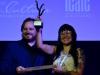
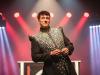
With La Cultura, Los Torreznos —Jaime Vallaure and Rafael Lamata— offered a stage action full of humor, critical thinking, and a clear-eyed view of social and everyday life. Using direct, ironic, and surprising language, they presented three ideas about culture that provoked reflection and laughter alike, creating an accessible and deeply stimulating experience for the attending audience.
Body, vulnerability, and thought in action
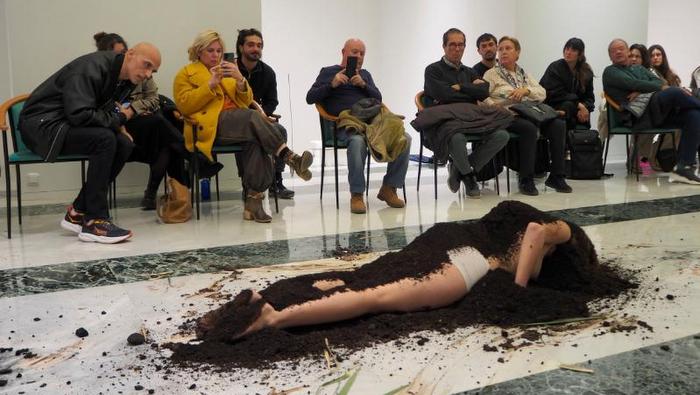
The sessions on December 5 and 6 offered a journey through different ways of understanding presence and gesture in action. Teresa Vilar opened the cycle by addressing the vulnerability of the exposed body and pain as an emotional passage through repetition and physical wear, while Jason brought the power of the unrepeatable to the room, with actions presented as pure experience, stripped of prior symbolism or closed interpretations. Marta de la T Mallafré explored the relationship between body and space as if it were a living territory, tracing a continuous dialogue between weights, voids, and movement.
The second day maintained intensity with proposals focused on the collective and the sensory: SURCOS, a group born at the UPV, deployed a choral action that turned corporeality into a motor for encounter, impulse, and community, while the closing act was by Santiago López, a sound artist who combines industrial knowledge with a radical approach to matter, creating metal idiophones amplified to literally make the Sala San Miguel vibrate.
An edition that strengthens connections and future projection
For Fundació Caixa Castelló, the results of this edition demonstrate that action art has a great capacity to generate participation, thought, and emotion. The public response —with full attendance and remarkable prior demand— reinforces the institution’s commitment to the most vital and experimental contemporary creation.
“Each year we see how the community attending these days grows. A loyal and active group has been consolidated at the Sala San Miguel, finding in performance a space for discovery, questioning, and shared enjoyment,” the Foundation highlights.
After eleven editions, these days have become a cultural landmark in the city and an essential meeting point for artists, researchers, and audiences interested in new forms of expression. With a clear vocation for continuity, Fundació Caixa Castelló remains committed to promoting this open space for creation, dialogue, and exchange in the coming years.
Publicación anterior Art Basel Miami Beach 2025 Concludes a Landmark Edition Marked by Global Reach, Strong Sales, and Expansive Programming
Publicación siguiente Dart Festival 2025 launches its core program, bringing new documentaries, activism and cutting-edge visual narratives
Publicaciones relacionadas