At the end of October and the beginning of November, different Hispanic-American communities commemorated their dead with rites and customs that, while sharing calendar dates, expressed distinct ways of understanding memory, loss and celebration. Some manifestations — such as Mexico’s Día de los Muertos — were recognized by international organizations; others preserved local traits deeply rooted in indigenous, colonial and popular traditions.
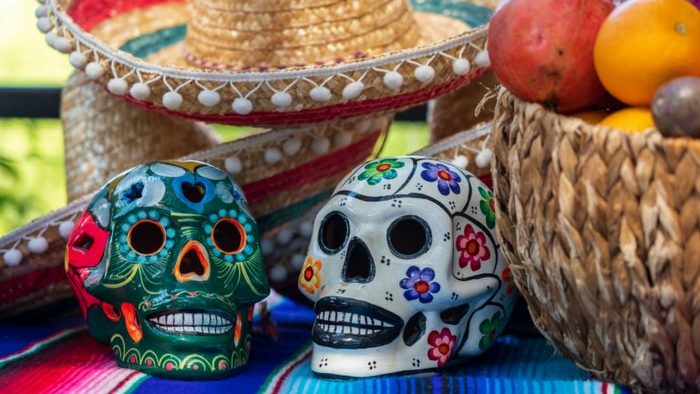
In Mexico, the Day of the Dead combined indigenous and Christian elements and was inscribed by UNESCO on the Representative List of the Intangible Cultural Heritage of Humanity. Families set up altars (ofrendas) including photographs, candles, marigolds, traditional foods such as pan de muerto, and personal objects intended to symbolically receive departed loved ones during their annual «visit.» The difference between dates for children and adults structured a ritual repertoire that combined memory, domestic cult and public festivity.
In the Andean region, practices such as colada morada and guaguas de pan in Ecuador were central: the purple drink and bread figures were consumed in family gatherings and offerings, symbolically uniting the living and the dead.
Peru and other Andean countries maintained altars and cemetery visits accompanied by traditional foods; these practices included cleaning and decorating graves, lighting candles and placing favorite foods and drinks at tombs.
Guatemala presented a distinctive expression: in towns like Sumpango and Santiago Sacatepéquez, communities assembled and displayed giant kites (barriletes gigantes) that were flown or paraded during All Saints’ Day. These kites, painted with intricate designs and built over weeks, functioned symbolically to communicate with ancestors, clear the sky of malevolent spirits, and mark the link between worlds; the technique of making these kites was recognized by UNESCO.
In Brazil, Finados (All Souls’ Day) retained a contemplative tone: families visited cemeteries, cleaned and decorated graves, and attended masses and remembrance acts.
Concurrently, Halloween —of Anglo-Saxon origin— manifested across urban centers as a popular and commercial phenomenon that included costumes, decorative imagery and children’s activities. Specialists and cultural commentators emphasized the importance of distinguishing such practices from ritual commemorations: traditional Catrina makeup and skull iconography in Mexico carry cultural meanings that differ from Halloween costumes.
Taken together, the observed commemorations demonstrated the persistence and adaptability of cultural practices: some consolidated as recognized heritage, others adapted to urban and media contexts; all sustained collective ways of remembering in public and private spheres.
On the cover: Nick Fewings/Unsplash
Previous publication Feriarte 2025: Madrid’s Grand Encounter with Art and Antiques
Next publication 24th Paiz Art Biennial to present “The Tree of the World” in Guatemala
Related Publications